How to Share a Bedroom With Your Baby
As an Amazon Associate I earn from qualifying purchases.
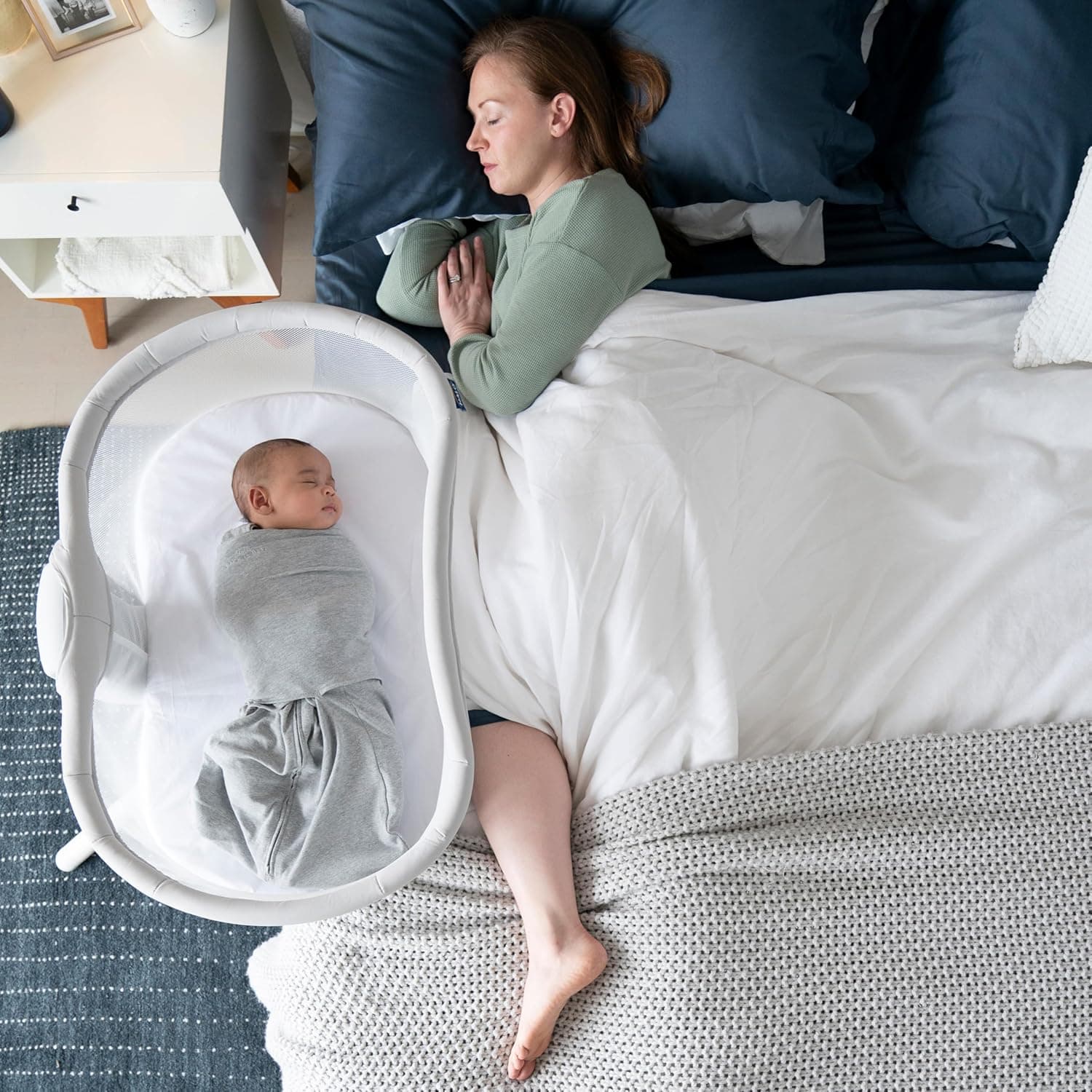
Room-sharing is recommended by pediatric guidance for at least the first months, and in a small home it is often the only option anyway. The challenge is doing it safely while keeping your bedroom restful for the adults too. Here is how to share a room without either of you losing sleep.
Set Up a Safe Separate Sleep Surface
Sharing a room does not mean sharing a bed. The safest arrangement keeps your baby on a separate, firm, flat sleep surface in the same room. A bedside bassinet is ideal here because it sits right next to your mattress for easy night feeds while keeping the baby on their own dedicated surface.
Position the bassinet on the side where you feed most often, away from cords, curtains, and radiators. Keep the sleep space bare with just a fitted sheet, since soft bedding and loose items are hazards. This setup gives you closeness for comfort and feeding without the risks of bed-sharing.
Create a Visual Divider
Even in one room, a light divider helps everyone sleep better. Separating the baby's sleep zone from your own with a curtain, a low bookshelf, or a folding screen blocks the glow of your phone or reading lamp from reaching the bassinet, and it gives you a sliver of adult space that still feels like yours.
A divider also helps with daytime naps. If your baby can sleep behind a screen while you move quietly around the rest of the room, you reclaim hours you would otherwise spend tiptoeing in the dark. Keep any divider stable and well away from the sleep surface so it cannot fall or be pulled down.
Mask Sound in Both Directions
When you share a room, your baby hears you and you hear every small noise your baby makes. A white noise machine helps on both counts. It masks the sounds of you shifting, reading, or getting ready for bed, and it gives the baby a steady sleep cue that covers up the little grunts that might otherwise wake you needlessly.
Place the machine between the two sleep areas at a moderate, safe volume, and keep it a good distance from the baby's head. Running the same sound every night also builds a strong sleep association, which pays off when you eventually move your baby to their own space.
Keep Diaper Changes Off Your Bed
Night changes are unavoidable, and doing them on your own bed gets messy fast. A portable changing pad kept on a nearby dresser or bench gives you a clean, contained surface within a step of the bassinet, so you can handle a 3 a.m. change quickly and get everyone back to sleep.
Stock a small caddy beside the pad with diapers, wipes, and a change of clothes so nothing sends you rummaging in the dark. Keeping the whole operation compact and predictable means night wakings stay short and your own bed stays a place for sleep.
Protect Your Own Rest
Room-sharing works long term only if the adults still get real rest, so plan the space with your own sleep in mind. Contain baby supplies in closed bins so the room does not feel like a nursery exploded into your bedroom, and keep clear walking paths for those middle-of-the-night trips.
Give yourself a calm corner that is still adult, even if it is just a chair and a lamp. Maintaining a bit of your own territory keeps the arrangement sustainable, which matters because room-sharing often lasts longer than new parents first expect.