Infant Optics DXR-8 480p Video Baby Monitor, Non-WiFi, Interchangeable Lenses, Pan Tilt Zoom Review (2026)
Updated September 20, 2026 · Research-based review
Our verdict
The Infant Optics DXR-8 suits parents who want a private, non-WiFi video monitor with a swappable zoom lens rather than the sharpest picture on the market. Its pan-tilt-zoom camera and FHSS connection are dependable, but the 480p image and older screen tech trail newer HD monitors at a similar price.
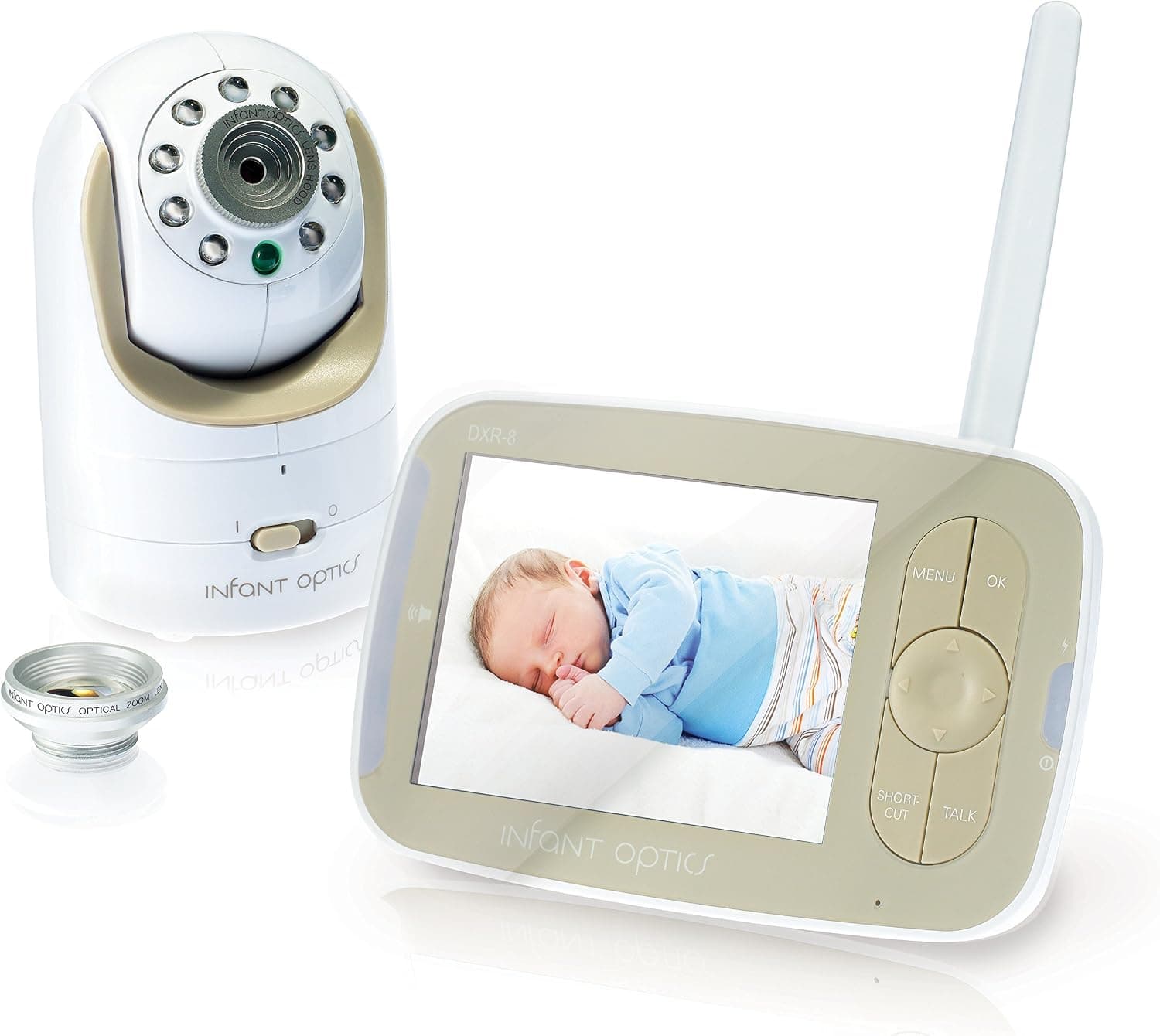
Infant Optics DXR-8 is a non-WiFi 480p video baby monitor with interchangeable lenses and pan tilt zoom camera control.
Price range: See on Amazon
What we liked
- + Interchangeable lenses let you choose a wide or zoomed view of the crib
- + Non-WiFi connection keeps the video local and simple to set up
- + Pan tilt zoom control follows a moving toddler around the room
Trade-offs
- - 480p resolution looks soft next to newer HD monitors
- - Older design, so battery and screen tech trail current models
What the interchangeable lens actually does
The DXR-8 was the first baby monitor built around swappable camera lenses, and the unit ships with a normal lens plus a zoom lens, with a wide-angle lens sold separately. The stock lens is a 2.5mm f/2.8 optic tuned for mid-range coverage of a crib and its immediate surroundings, and swapping in the zoom lens lets you tighten the frame on a changing table or play area without moving the camera itself. Independent testing found the concept clever but noted most parents will pick one lens and leave it mounted rather than swap regularly, since removing and reattaching a lens on a wall-mounted camera is fiddly. Still, for a small space where one camera has to cover a crib now and a toddler bed later, having the option is a genuine point of difference from fixed-lens monitors in this price range.
Non-WiFi connection and pan-tilt-zoom control
This is a dedicated monitor that pairs camera and parent unit over a closed FHSS radio link rather than your home WiFi, so there is no app, no cloud account, and no router dependency to troubleshoot at 2am. Setup is plug-and-play, and the parent unit lets you pan, tilt, and zoom the camera remotely, which is useful for following a toddler who has started climbing out of a crib or roaming a shared bedroom. The trade-off independent reviewers flagged is indoor range: through several interior walls the signal can drop out well before it would on a WiFi camera, so a larger home or one with plaster walls may need the camera and parent unit kept closer together than the spec sheet suggests.
Video quality and night vision
At 480p, daytime video is noticeably softer than the 720p and 1080p screens now common on newer non-WiFi monitors, and independent lab testing described text on a resolution chart as visibly fuzzy at normal viewing distance. Colors also run slightly darker than accurate. Night vision holds up reasonably well for spotting movement and general shape, with decent contrast even though fine edges blur, which is the more important use case for most nighttime checks. Two-way talk and an LED sound bar that lights up with noise level are both included, giving you a visual cue of crying even with the sound down, and a room temperature sensor rounds out the feature set, though testers found its readings only loosely accurate.
Battery life and daily use
Infant Optics rates the parent unit at roughly six and a half hours of continuous screen-on use, and independent testing actually measured over eleven hours before recharge, so real-world battery life tends to beat the spec sheet. That is a meaningful plus if you carry the parent unit around a small apartment during the day rather than leaving it docked. Maximum volume on the parent unit measured below average in the same testing, which matters if your nursery shares a wall with a living room or home office and you want the crying alert audible over daytime noise. There is no screen-off audio-only mode indicator beyond the sound bar, so you are relying on that light or the speaker itself.
Where it fits and where it falls short
The DXR-8 remains a sound pick for parents who specifically want a monitor that never touches WiFi and who value the interchangeable lens concept, even if they end up using only one lens day to day. It is a dated design next to newer non-WiFi competitors that now ship with larger screens, higher resolution, and longer battery ratings at similar or lower prices, and one independent multi-monitor test ranked it toward the back of the field on video sharpness and range. Buyers upgrading from an older Infant Optics unit or who already own extra lenses get the most value here; shoppers starting fresh should compare it directly against current 720p non-WiFi models before deciding.
Frequently asked questions
Does the Infant Optics DXR-8 connect to WiFi or an app?
No. It uses a closed FHSS radio connection between the camera and a dedicated parent unit, with no WiFi, router, or app involved.
What is the interchangeable lens for?
The camera ships with a standard lens and a zoom lens, with a wide-angle lens available separately, so you can change the field of view without repositioning the camera.
How long does the parent unit battery last?
The manufacturer rates it at about six and a half hours of continuous use, though independent testing measured over eleven hours with the screen on.
Is 480p video good enough for a nursery monitor?
It is usable for checking on a sleeping baby, especially at night, but it looks noticeably softer in daylight than newer 720p or 1080p non-WiFi monitors.
Prices change often, so check the current price and availability on Amazon.
Check price on AmazonSmall Space Baby may earn a commission from the link above.